


 PLATFORM UPDATE:

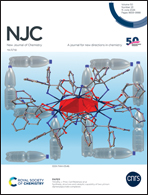
Atomic precision engineering of heterometallic hexanuclear Al/M MOFs for supercapacitor applications

Abstract
Heterometallic metal–organic frameworks (HMOFs) are transformative platforms for electrochemical energy storage, offering unparalleled structural and electronic tunability through the integration of distinct metal centers. However, synthesizing HMOFs with discrete heterometallic clusters co-assembled by main-group aluminum and d-block transition metals remains challenging, due to intrinsic mismatches in coordination geometry, ligand affinity, and hydrolysis kinetics between disparate metal species. Overcoming these challenges, coupled with the pervasive stability–activity trade-off in HMOF-based electrodes, requires innovative synthetic strategies and mechanistic insights into charge storage and ion/electron transport. Herein, we report a dual atomic strategy integrating multi-metal modification and isonicotinic acid preoccupation to address these challenges, yielding three isomorphic hexanuclear Al/M-MOFs with the formula {[Al12M6O6(OH)6(Ina)6(BTB)8][NO3]6}n (SXNU-20-Al/M, M = Mn, Co, Ni, H3BTB = 1,3,5-tris(4-carboxyphenyl)benzene, Ina = isonicotinic acid) with a 12-connected dual-wall cage-in-cage architecture. These frameworks exhibit exceptional stability and high specific capacitances at 1 A g−1: 162.86 (Mn), 168.39 (Co), and 208.66 mAh g−1 (Ni). Density functional theory calculations reveal that OH− adsorption around μ2-OH ligands enhances the reducibility of SXNU-20-Al/Ni, facilitating faradaic redox reactions. This strategy advances HMOF-based supercapacitor performance, offering insights for advanced energy storage materials design.

 Please wait while we load your content...


