


Enhancing lignin depolymerization in poplar by hemicellulose-first removal via oxalic acid pretreatment
 a
a
Abstract
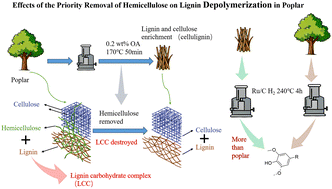
Facing the depletion of fossil fuels, the utilization of renewable lignocellulosic biomass has become imperative. However, its efficient fractionation into the three main components is significantly hindered by recalcitrant lignin-carbohydrate complexes (LCC). A hemicellulose-first strategy using oxalic acid (OA) pretreatment stands out as particularly promising: hemicellulose is extensively cross-linked with lignin via LCC bonds; its selective extraction effectively disrupts the LCC network, thereby facilitating subsequent separation and conversion of cellulose and lignin. OA was chosen for its biomass-derived origin, mild acidity, low corrosiveness, and high hemicellulose selectivity. Guided by this strategy, this study compared different acid pretreatments and selected OA to investigate the reaction kinetics of hemicellulose removal and its impact on lignin depolymerization. Under mild optimized conditions (0.2 wt% OA, 170 °C, and 50 min), hemicellulose was nearly completely removed, primarily yielding collectible xylooligosaccharides (XOS) and xylose (65–90% recovery) suitable for high-value applications such as prebiotics and platform chemicals. Kinetic analysis of the OA pretreatment elucidated the reaction pathways of hemicellulose removal, offering fundamental insights for industrial implementation. The resulting cellulignin solid (enriched in cellulose and lignin) exhibited markedly enhanced lignin depolymerization efficiency during subsequent hydrogenolysis, yielding significantly higher monomeric phenols with complete cleavage of native linkages (2D HSQC-NMR). This improvement is directly attributed to the hemicellulose-first removal, which disrupts LCC and increases the accessibility and reactivity of lignin. This work not only demonstrates a feasible and efficient biorefinery pathway for poplar but also provides a green and efficient strategy for the fractionation of lignocellulose.
 Please wait while we load your content...


