


 PLATFORM UPDATE:

Mitochondria-targeted liposomes decorated by amphiphilic 2-hydroxypropylphosphonium salts for hyperthermia-induced release and antitumor application

Abstract
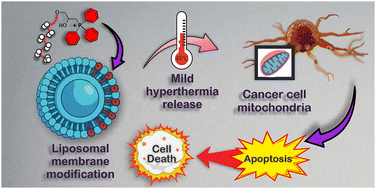
The smart design and stimulus-sensitive control of the properties of mitochondria-targeted systems are at the forefront of advanced and promising therapies for numerous diseases. We report a series of amphiphilic 3-alkoxy-2-hydroxypropyl triphenylphosphonium salts (RO–HP–TPPSs, where R = CnH2n+1 and n = 1–18) that act as new mitochondrial agents and molecular regulators of liposome membrane permeability, with low melting points of <100 °C. The dodecyl (R = C12H25) and tetradecyl (R = C14H29) derivatives of RO–HP–TPPSs, with Krafft points close to 36 °C and 58 °C, respectively, form micelle-like associates at concentrations of 400 and 150 µM, respectively. The lipid film hydration method is used to prepare RO–HP–TPPS-decorated soy phosphatidylcholine-based liposomes and PEG-liposomes with a size of 100 nm, a charge of +40 mV and good stability. The cytotoxicity of RO–HP–TPPS-containing PEGylated liposomes is comparable to that of doxorubicin against tumor cell lines and 10 times lower against normal cell lines. The tuning of their hydrophilic cargo release properties is done at physiological temperature and hyperthermia conditions at 45 °C.
 Please wait while we load your content...


