


 PLATFORM UPDATE:


Exploring the biological mechanism of Wendan decoction against COPD based on UHPLC-DAD: experimental validation and molecular docking
Abstract
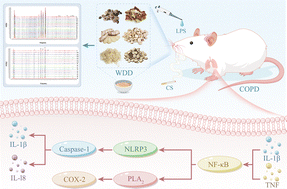
Wendan decoction (WDD), a classic six-herb formula, exerts therapeutic effects against chronic obstructive pulmonary disease (COPD), but its pharmacodynamic basis and molecular mechanisms remain largely elusive. In this study, UHPLC-DAD was used to establish the chromatographic fingerprint of WDD and quantify 11 representative components. A COPD rat model was induced by cigarette smoke (CS) exposure, followed by 42-day WDD treatment. Western blot, qRT-PCR, and molecular docking were employed to elucidate the potential therapeutic mechanism of WDD. Results revealed that the fingerprint similarity across 15 batches of WDD exceeded 0.900. WDD significantly reduced inflammatory factors in the bronchoalveolar lavage fluid, attenuated pulmonary inflammation and emphysema, and inhibited the overactivation of the NF-κB-NLRP3/arachidonic acid (AA) pathway. Molecular docking confirmed favorable binding affinities between the components of WDD and key targets, with binding energies ranging from −5.3 to −10.1 kcal mol−1. In conclusion, WDD exerts its anti-inflammatory effects in CS-induced COPD rats by modulating the NF-κB-NLRP3/AA signaling pathway.
 Please wait while we load your content...


