


 PLATFORM UPDATE:

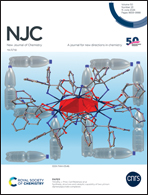
Synthesis, Characterization, Antioxidant Activity and DNA Binding Affinity of Novel Metal Complexes Based on Amentoflavone Extracted from Ginkgo Biloba Leaves
Abstract
Amentoflavone (Ame) is a kind of precious biflavonoids with various bioactivities. To further develop and use Ame, Ame was extracted and purified from ginkgo biloba leaves, and Ame complexes with metal ions (Mn 2+ /Fe 3+ /Co 2+ /Ni 2+ /Cu 2+ /Zn 2+ ) were first synthesized. The structures of Ame complexes were characterized by UV/Vis, FT-IR, HRMS and DFT calculation. The antioxidant capacity was evaluated by pyrogallol autoxidation and ABTS methods. DNA binding affinity were explored via fluorescence method and molecular docking. The structural analysis indicated the stoichiometric ratios of Ame and Mn 2+ /Co 2+ /Ni 2+ /Cu 2+ /Zn 2+ were 1:1, the chelation site was between 5''-hydroxyl and 4''-carbonyl. While the stoichiometric ratio of Ame and Fe 3+ was 2:2, and the chelation site was between 5''-hydroxyl and 4''-carbonyl, 5-hydroxyl and 4-carbonyl. The investigation of pyrogallol autoxidation and ABTS methods demonstrated Ame complexes had superior scavenging activities on O 2 -• and ABTS + • free radicals. What's more, scavenging free radical activity of some Ame complexes was stronger or similar comparing with VC. The results of fluorescence method indicated Ame complexes had stronger DNA binding affinity with intercalation mode. Molecular docking study confirmed Ame and its complexes interacted with DNA via Van der Waals, conventional hydrogen bond and π-π stacked effect. These results demonstrated bioactivities of Ame could be enhanced via forming complexes with metal ions and provided theoretical knowledge for biflavonoids acting as potential drug, dietary supplement and cosmetics.
 Please wait while we load your content...


