


 PLATFORM UPDATE:


Enhanced stability of active Cu2C2 sites derived from layered copper phyllosilicate: boosting formaldehyde ethynylation for 1,4-butynediol synthesis
 *a
*a
Abstract
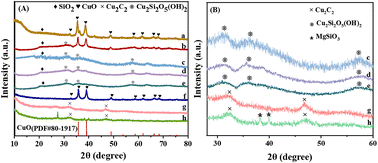
Cu-based catalysts have garnered significant attention in ethynylation of formaldehyde for synthesis of 1,4-butynediol. However, the stability of Cu-based catalysts remains a major challenge under a reducing atmosphere. In this study, a series of Cu/SiO2 catalysts incorporating copper phyllosilicate were prepared using a microwave-assisted hydrolytic precipitation method and applied to this reaction. The effects of different aging times, calcination temperatures, and pH values on catalyst structures and ethynylation performances were systematically investigated. The results show that Cu/SiO2 (4 h–300 °C–7.5) demonstrated the highest yield (68%) and selectivity (93%) for 1,4-butynediol after the ethynylation reaction for 7 h. Furthermore, this catalyst exhibited superior cyclic stability, retaining its performance for over 100 h and matching the benchmark of a commercial catalyst. The apparent activation energy of Cu/SiO2 (4 h–300 °C–7.5) is 25.84 kJ mol−1, slightly higher than that of the commercial catalysts (25.38 kJ mol−1), indicating comparative reaction efficiency. Extensive characterization revealed that the high performance of this catalyst is attributable to its abundant layered copper phyllosilicate structure, which promotes a highly uniform dispersion of Cu species. Moreover, the strong interaction between CuO and SiO2 within the phyllosilicate matrix plays a crucial role in stabilizing the active Cu2C2 species, thereby effectively suppressing its excessive reduction to metallic copper during the reaction. Additionally, the microwave-assisted hydrolytic precipitation method proved to be significantly more efficient and cost-effective for fabricating layered copper phyllosilicate compared to conventional synthesis routes.
 Please wait while we load your content...


