


 PLATFORM UPDATE:


Engineering defects in Mn-based nanocatalysts via atmosphere-controlled pyrolysis of Mn–BDC for enhanced CO2-to-ethylene urea conversion

Abstract
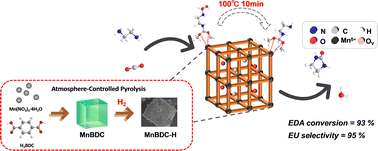
The conversion of CO2 to ethylene urea (EU) presents a promising route for mitigating the greenhouse effect while utilizing CO2 as a renewable carbon resource. However, the high thermodynamic stability of CO2 often necessitates harsh reaction conditions such as high temperature, high pressure, and prolonged duration. In this study, a series of manganese-based catalysts were synthesized by calcining manganese-based metal–organic frameworks (MnBDC) under different atmospheres (oxidizing gas air, reducing gas H2, and inert gas N2). It was found that only the MOF derivatives treated in an air atmosphere (MnBDC–A) transformed into a pure Mn2O3 structure, while those treated with H2 (MnBDC–H) and N2 (MnBDC–N) still retained their good MOF structure. Performance test results showed that the effect of the calcination atmosphere on the catalytic activities and characteristics strongly depended on the nature of the MOF. Among these catalysts, MnBDC–H demonstrated the best catalytic performance for the synthesis of EU from CO2 to obtain 93% conversion of EDA and 95% selectivity of EU within only 10 min at 100 °C, much superior to those of catalytic materials reported previously in the literature. This could be assigned to more Mn3+ species and surface oxygen vacancy concentration on the MnBDC–H, which significantly enhanced CO2 adsorption and activation, facilitating the formation of carbamate adspecies intermediates and thereby improving the EU yield. This work provides an effective atmosphere-engineering strategy for designing highly efficient MOF-derived catalysts for CO2 conversion applications.
 Please wait while we load your content...


