


 PLATFORM UPDATE:


Efficient triplet–triplet energy transfer that activates room-temperature phosphorescence of coumarin guests

Abstract
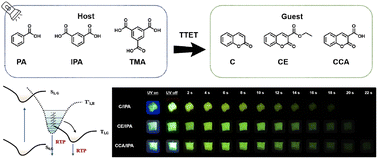
Classic fluorescent coumarin derivatives can be made to exhibit outstanding room-temperature phosphorescence (RTP) through a reasonable design strategy. Herein, by doping the guest coumarin derivatives into the aromatic carboxylic acid host matrix, the RTP of the coumarin derivatives was successfully activated. Among these host–guest-doped system materials, CCA/IPA exhibited an optimal RTP lifetime of 327 ms, while CCA/TMA achieved a phosphorescence quantum yield of 4.11%. The experimental results and theoretical calculations were analyzed to explore the RTP emission mechanism of the host–guest-doped system. On the one hand, a rigid hydrogen bond network was formed between the host and guest units, inhibiting non-radiative transitions. On the other hand, efficient triplet–triplet energy transfer (TTET) from the host matrix to the guest molecule activated the RTP of the coumarin guest units. Based on these findings, the developed materials have been successfully applied in the fields of information encryption and anti-counterfeiting, demonstrating promising application prospects.
 Please wait while we load your content...


