


 PLATFORM UPDATE:


Synthesis and application of conductive ink of G-AMT–Ag based on molecular bridging
 *a
*a
Abstract
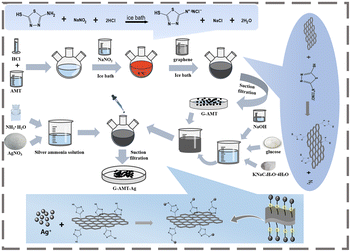
Graphene/nano-silver inks have become the new favorite in conductive inks, and graphene/nano-silver composites are primarily prepared through physical blending or grafting with oxygen-containing functional groups, which increases interfacial contact resistance and surface structural defects, reducing conductive performance. In this study, molecular bridging technology was adopted to prepare a graphene/nano-silver composite using AMT as the molecular bridging agent. One end of AMT was anchored to the graphene surface via a diazonium reaction, while the other end reacted with silver ions through a thiol group to form a silver–sulfur bond, and a graphene/silver nanoparticle composite named G–AMT–Ag was obtained. The molecular structure and properties of the G–AMT–Ag composite were systematically characterized through SEM, FTIR, XRD, XPS, and other methods. The effect of the graphene/nano-silver ratio on dispersibility was analyzed, and the optimal molar ratio of graphene/nano-silver was found to be 50/11. The G–AMT–Ag conductive ink was screen-printed on a PET substrate for conductivity testing, the conductivity was measured to be 41 003 S m−1, which is 1.9 times that of a G/Ag ink, and the flexibility testing demonstrated excellent performance. This study provides a preparation method of graphene/silver nanoparticle conductive ink with low-cost and high conductivity, demonstrating significant application potential in the field of flexible electronics.
 Please wait while we load your content...


