


 PLATFORM UPDATE:


Cobalt-based metal–organic framework derived Co/CoO@C under moderate temperature for improving the performance of photocatalytic degradation of organic pollutants

Abstract
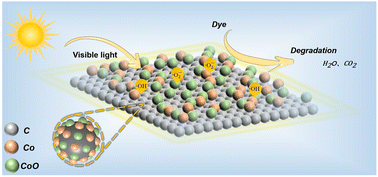
This study employed the low-cost rare earth element cobalt as the metal node. By selecting Co(II) ion, N,N′-(1,4-phenylene)dinicotinamide (1,4-pdna), and 1,4-naphthalenedicarboxylic acid (1,4-H2NDC), a novel cobalt-based metal–organic framework (Co-MOF), namely {[Co(1,4-pdna)1.5(1,4-NDC)(H2O)]·3H2O}n was designed and synthesized via a hydrothermal method. By calcinating the precursor at different temperatures, a series of materials were obtained, namely Co/CoO@C-400/600/800/1000. The characterization and analysis of Co-MOF and its derived materials were conducted in detail. The photocatalytic performance of these materials was investigated under visible light irradiation using five different dyes as degradation targets. Experimental results demonstrated that Co/CoO@C-400 exhibited the optimal degradation efficiency for gentian violet (GV), achieving a degradation rate of 96.8% after 240 min under visible-light irradiation. Mechanistic studies revealed that photogenerated holes (h+), hydroxyl radicals (˙OH), and superoxide anion radicals (˙O2−) functioned synergistically, which was further verified through trapping experiments. The enhanced photocatalytic activity was attributed to the reduced bandgap of the material and the synergistic effect arising from the intimate interfacial coupling between Co/CoO and the carbon matrix, which facilitates efficient charge separation and transfer. The structure simultaneously accelerated interfacial charge transfer during the photocatalytic reaction. Furthermore, Co/CoO@C-400 efficiently catalyzed the degradation of various organic dyes under visible-light irradiation, demonstrating promising potential for applications in environmental remediation.
- This article is part of the themed collection: New Journal of Chemistry HOT Articles
 Please wait while we load your content...


