


 PLATFORM UPDATE:

Green synthesis of garlic peel-based carbon dots for detection of metal ions and printable anti-counterfeiting applications
Abstract
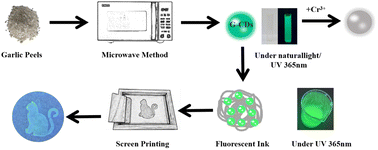
In recent years, the research on the preparation of carbon dots (CDs) from biomass waste has been increasing. Consequently, there is a growing emphasis on developing green and convenient synthetic routes and exploring practical applications for such materials. In this study, green fluorescent carbon dots (G-CDs) with good water solubility and fluorescence were synthesized from waste garlic peel by a one-step microwave method. The resulting G-CDs exhibited notable environmental sensitivity and showed great potential for applications in heavy metal ion detection and fluorescence anti-counterfeiting. The detection limit of Cr3+ was 1.69 µM. Furthermore, the G-CDs and Rhodamine B can be configured with a ratio-type fluorescent probe, which enables the visual detection of metal ions with the aid of the color recognition software in a mobile app. Furthermore, a fluorescent powder was prepared by compounding G-CDs with soluble starch, enabling solid-state luminescence. Using this as a fluorescent material and hydroxyethyl cellulose–G-CDs colloid as a linking material, a green and environmentally friendly fluorescence anti-counterfeiting ink was prepared. This ink has good fluorescence performance and screen printing adaptability, including viscosity, glossiness, friction resistance, etc. This work provides a new platform for the development of eco-friendly, fast and low-cost CDs for visualization applications.
 Please wait while we load your content...


