


 PLATFORM UPDATE:


A novel FeMoOv nanozyme-based dual-mode sensing system for highly selective and sensitive glutathione monitoring
 †c
†c
Abstract
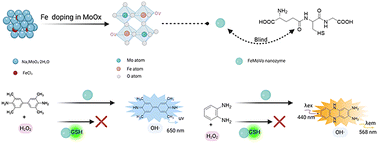
Accurate and sensitive detection of glutathione (GSH) is essential for understanding oxidative stress-related pathological processes and developing therapeutic strategies. Herein, a novel Fe-doped MoOx with oxygen vacancy (FeMoOv) nanozyme was synthesized, exhibiting exceptional sensitivity to GSH. FeMoOv exhibits peroxidase-like activity, efficiently catalyzing the oxidation of 3,3,5,5-tetramethylbenzidine (TMB) and o-phenylenediamine (OPD) in the presence of hydrogen peroxide (H2O2), generating blue oxidised-TMB (ox-TMB) with an absorbable peak at 650 nm and yellow 2,3-diaminophenazine (DAP) with strong fluorescence at 568 nm, enabling dual-mode fluorometric and colorimetric detection. Notably, the sulfhydryl groups in GSH are selectively linked to the surface of the FeMoOv nanozyme, significantly inhibiting its catalytic activity. Leveraging this principle, a dual-mode (fluorescence and colorimetry) sensing system using a FeMoOv nanozyme was designed to detect GSH in a highly sensitive and specific manner. This detection system achieves an LOD of 0.1 µM and a broad linear range from 0 to 100 µM. The sensing system was successfully applied to quantify GSH in human serum, demonstrating excellent recoveries ranging from 97.90% to 119.10% in the TMB-mediated sensing system as well as 93.86% to 104.70% in the OPD-mediated sensing system. Moreover, the system effectively exhibited significant GSH level differences between the MDA-MB-231 and HEK-293 cell lysates, and the relatively high consistency of the two sensing systems was verified in commercially available edible pork liver and duck blood samples, further underscoring its potential for biological and biomedical research applications.
 Please wait while we load your content...


