


 PLATFORM UPDATE:


Customized porous aromatic frameworks (PAFs) as an oral antidote for efficient and selective intestinal detoxification
 *c
Nan
Gao
*a
*c
Nan
Gao
*a
Abstract
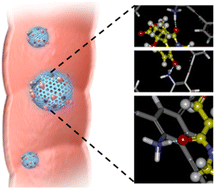
Adverse drug reactions (ADRs) have become a prominent issue arising from the boom in pharmaceutical technology. In 2022 alone, approximately 2 340 000 and 2 023 000 ADR events were reported in the USA and China, respectively, with more than 25% occurring in the gastrointestinal system, leading to diarrhea, dehydration, and even death. Due to the complicated mechanisms of adverse reactions, the fastest detoxification method is still physical adsorption removal. However, the lack of selectivity leads to the antidotes adsorbing both toxic metabolites and nutrients, resulting in nutritional deficiencies and extended rehabilitation times for patients. Herein, we designed a series of porous aromatic frameworks (PAFs) with progressively tuned monomer sizes and distinct pore environments to selectively adsorb 7-ethyl-10-hydroxycamptothecin (SN-38), the toxic metabolite of the anticancer drug irinotecan, via pore-size restriction and functional-group interactions, thereby enabling fast intestinal detoxification. Intriguingly, the optimal PAF derivative, PAF80-Z2-NH3+, could achieve a removal rate of over 90% for SN-38 in a complex system within 20 minutes, which was 14.5-fold higher than that of smectite powder, which was attributed to its hydrogen bonding and enhanced π–π interactions with SN-38. This led to a significant reduction in diarrhea severity and intestinal mucosal damage, without compromising irinotecan's therapeutic effect. Moreover, the PAF derivative presented excellent stability and negligible biotoxicity. The use of PAFs for the selective removal of adverse drug products provides a new way to build detoxification agents.
 Please wait while we load your content...


