


 PLATFORM UPDATE:


Detecting conformational changes in switchable heterodimer plasmon rulers through iSCAT fluctuation microscopy

Abstract
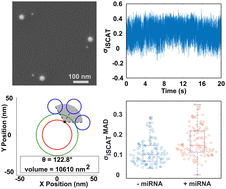
The superb detection sensitivity of interferometric scattering (iSCAT) microscopy enables a high-speed optical read-out of individual dimers of DNA-tethered noble metal nanoparticles (NPs), so called Plasmon Rulers. The iSCAT contrast of Plasmon Rulers depends on their structure, and fluctuations of the iSCAT contrast may provide insight into the conformational dynamics of the tether molecule. In this work, heterodimer Plasmon Rulers are assembled from 40 and 20 nm diameter Au NPs using a switchable DNA tether. The tether contains a central molecular beacon hairpin sequence that opens upon binding of the micro-RNA (miRNA) 574-3P (MW = 6582.3 Da). The 40 nm NP of the heterodimers is immobilized on a glass support, while the 20 nm NP is left to perform a tethered particle diffusion. The iSCAT contrast of individual heterodimers is collected before and after exposure to miRNA with an acquisition rate of 50 kHz. Binding of the 22 nucleotides long target miRNA to the molecular beacon segment increases the accessible conformational space of the tethered 20 nm NP. The resulting gain in conformational variability of the heterodimer is detected as a significant increase in the mean absolute deviation (MAD) of the iSCAT contrast. These findings confirm that iSCAT fluctuation microscopy of the heterodimer Plasmon Rulers can detect conformational changes in the tether molecule and pave the path to monitoring the conformational dynamics of individual biopolymers.
 Please wait while we load your content...


