


 PLATFORM UPDATE:

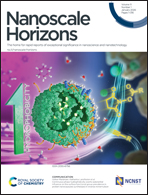
Efficient methane to ethane conversion via C–H bond activation catalyzed by a MOF-derived porous PdO/TiO2 nanocomposite

Abstract
The photocatalytic conversion of methane (CH4) into high-value multicarbon (C2+) products under ambient conditions provides a highly promising approach for the transformation of the energy structure and environmental protection. However, the high C–H bond dissociation energy of CH4 and the overoxidation of methyl radical (˙CH3) intermediates greatly limit the conversion of CH4 to C2+ products. Herein, we demonstrate a metal–organic framework (MOF) crystal engineering strategy to synthesize a MOF-derived PdO/TiO2 nanocomposite for photocatalytic nonoxidative coupling of methane (NOCM), achieving high selectivity and activity in the conversion of CH4 to ethane (C2H6). Mechanistic investigations reveal that the spatially separated active sites for C–H bond cleavage and C–C coupling contribute to the efficient conversion of CH4 to C2H6. Specifically, the lattice oxygen captures the photogenerated holes, leading to the formation of oxygen radical anions (˙O−), which activate the C–H bond and generate ˙CH3 intermediates. PdO stabilizes ˙CH3 intermediates, effectively inhibiting the overoxidation of ˙CH3, and thereby promoting the C–C coupling process. This work opens a new avenue for the rational design of efficient MOF-derived photocatalysts for NOCM.

 Please wait while we load your content...


