


 PLATFORM UPDATE:


Surfactant-coated iron oxide nanoparticles synthesized by coprecipitation as potential phosphate adsorbents in peritoneal dialysis

Abstract
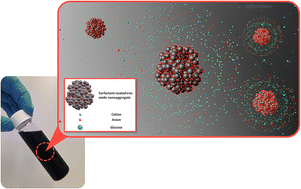
Iron oxide nanoparticles (IONPs) were recently shown to be effective phosphate adsorbents for enhancing phosphate removal during peritoneal dialysis (PD) treatment. However, such application requires surfactant-coated IONPs synthesized using a sustainable and easy scalable synthesis method displaying a high specific surface area for ensuring a high phosphate removal and a high colloidal stability in dialysate used for PD (exhibiting a high osmolarity and ionic strength). To address these challenges, we have developed the synthesis by the coprecipitation method of IONPs coated with three different surfactants: polyacrylic acid (PAA), tannic acid (TA), and polydiallyldimethylammonium chloride (PDADMAC). Stable colloidal suspensions of PAA- and TA-coated IONPs in pH 7 water and dialysate were obtained by performing the coprecipitation in the presence of surfactants, while stable suspensions of PDADMAC-coated IONPs were manufactured by a two-step process. PAA- and TA-coated IONP suspensions exhibited a lower mean hydrodynamic size compared to PDADMAC-coated IONP suspensions. They all showed a high long-term colloidal stability in dialysate: at least 3 weeks for PAA- and TA-coated IONP suspensions and one week for PDADMAC-coated IONP suspensions. Furthermore, they were demonstrated to be more colloidally stable in dialysate than commercial maghemite nanoparticles coated with similar surfactants. Phosphate adsorption studies evidenced the high phosphate removal capacities of PDADMAC- and PAA-coated IONPs compared to TA-coated ones, which were removed as potential adsorbents due to the formation of a TA-phosphate complex. Thus, this study highlights PDADMAC- and PAA-coated IONPs as promising phosphate adsorbents to be further tested under PD simulating conditions.
- This article is part of the themed collection: Magnetic Nanoparticles: From Massart Method to a Cascade of Innovations
 Please wait while we load your content...


