


 PLATFORM UPDATE:


Synthesis of azole-linked s-triazine-isatin molecular architectures as nanoscale DNA-targeting agents: a combined spectroscopic and computational study

Abstract
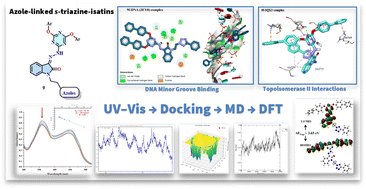
DNA, a ∼2 nm diameter biopolymer, represents a fundamental nanoscale target for anticancer therapeutics due to its central role in replication and transcription. In parallel, DNA topoisomerase II (topo II), a key regulator of DNA topology, remains a validated enzymatic target for chemotherapeutic intervention. Herein, we report the synthesis of a series of azole-linked s-triazine-isatin hybrids 9a–f designed as multifunctional nanoscale DNA-targeting architectures. The nano-bio interactions of these hybrids with salmon sperm DNA (SS-DNA) were systematically investigated under physiological conditions (pH 7.4) using UV-vis absorption spectroscopy. Binding constants (Kb), determined using Benesi–Hildebrand analyses, ranged from 103 to 105 M−1, with 9f showing the highest affinity (1.20 × 10⁵ M−1 at 298 K), comparable to the reference standard. The Gibbs free energy change (ΔG = −28.9 kJ mol−1) indicated that the binding of 9f is spontaneous. Molecular docking studies supported these experimental findings, revealing that 9f forms stabilizing hydrophobic and hydrogen-bonding interactions within AT-rich DNA grooves (docking score: −10.3 kcal mol−1, PDB: 3EY0) and binds topoisomerase II with a docking score of −10.7 kcal mol−1 (PDB: 3QX3). Molecular dynamics simulations further confirmed the structural stability and dynamic behavior of the DNA–ligand and protein–ligand complexes. In addition, DFT calculations and in silico drug-likeness evaluations provided insights into electronic properties and pharmacokinetic potential. Collectively, these results highlight azole-linked s-triazine-isatin hybrids as promising nanoscale DNA-targeting scaffolds for anticancer development.
 Please wait while we load your content...


