


 PLATFORM UPDATE:


Comprehensive study of ultrathin TiN films by ALD: influence of film thickness and substrate on composition, structure, sheet resistance and durability

Abstract
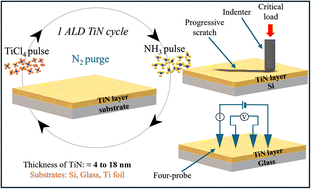
This study investigates ultrathin titanium nitride (TiN) films in terms of their crystallographic structure, surface chemistry, sheet resistance and mechanical durability. These TiN ultrathin films were created by Atomic Layer Deposition (ALD) using TiCl4 and NH3 as precursors. The process consisted of 100, 200, 300 and 400 deposition cycles yielding ultrathin films 4.7, 9.4, 14.1 and 18.8 nm in thickness, respectively. Different planar substrates were employed, namely Si wafers, soda lime glasses and Ti foil. Based on image analyses, the deposition rate of 0.047 nm per cycle for ALD TiN (at 400 °C) was determined. A sheet resistance of 287 Ω/□ was achieved for the 18.8 nm film. X-ray diffraction (XRD) analysis confirmed the formation of cubic TiN with increasing crystallinity and texture with increased thickness. Sputter depth profiling in tandem with X-ray photoelectron spectroscopy (XPS) distinguished the uppermost oxidized surface from the stoichiometric TiN core in the films. Scratch tests demonstrated an enhanced adhesion and scratch resistance with ALD TiN films, aligned with the observed microstructural improvements. The comprehensive correlation between the film thickness, and their chemical composition, crystalline structure and mechanical performance highlights the vital role of ALD parameters in preparing TiN thin films for advanced technological applications.
 Please wait while we load your content...


