


 PLATFORM UPDATE:


Targeting brain tumours with precision: advances in magnetic nanoparticle therapy

Abstract
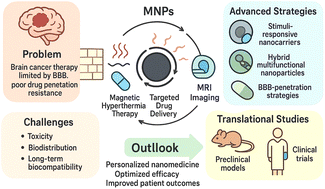
Brain cancer remains one of the most challenging malignancies due to the blood–brain barrier (BBB), limited drug penetration, and resistance to conventional therapies. Recent advancements in magnetic nanoparticles (MNPs) have opened new avenues for targeted and efficient brain cancer treatment. MNPs offer multifunctionality, including magnetic hyperthermia therapy, targeted drug delivery, and enhanced imaging via magnetic resonance imaging (MRI). This review explores the latest progress in MNP-based theranostics, highlighting their physicochemical properties, functionalization strategies, and mechanisms of action in brain cancer therapy. Additionally, we discuss novel approaches such as stimuli-responsive nanocarriers, BBB penetration techniques, and multifunctional hybrid nanoparticles. Furthermore, preclinical and clinical studies are reviewed to assess the current status and translational challenges. Despite promising outcomes, toxicity, biodistribution, and long-term biocompatibility remain key hurdles in clinical applications. Addressing these limitations will pave the way for personalized nanomedicine-based brain cancer treatment, optimizing therapeutic efficacy and patient outcomes.
- This article is part of the themed collection: Recent Review Articles
 Please wait while we load your content...


