


 PLATFORM UPDATE:

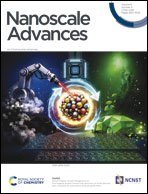
Post-ageing guided closed-loop discovery of multi-element alloy catalysts for automotive exhaust purification
 *a
Kohei
Kusada,
bc
Megumi
Mukoyoshi,
b
Hiromasa
Kaneko,
d
Masaaki
Haneda,
e
Hiroshi
Kitagawa
*b
*a
Kohei
Kusada,
bc
Megumi
Mukoyoshi,
b
Hiromasa
Kaneko,
d
Masaaki
Haneda,
e
Hiroshi
Kitagawa
*b
Abstract
Multi-element alloy catalysts exhibit tunable electronic structures and remarkable thermal stability, making them promising materials for automotive exhaust purification. However, most data-driven explorations have emphasised fresh activity, overlooking the post-ageing durability that governs real-world performance. Here, we have developed a closed-loop high-throughput discovery framework that employs post-ageing activity as the principal design index and integrates inverse analytical prediction to accelerate the development of durable high-entropy alloy catalysts. A total of 1493 catalysts were synthesised and automatically evaluated, yielding over one hundred compositions surpassing Pd benchmarks in low-temperature activity, total conversion, and durability. Mechanistic analyses revealed that the enhanced performance originates from cooperative sites formed between different elements—indicating synergistic adsorption behaviour beyond that of individual metals—and from synthesis conditions involving low temperatures and high alkalinity, which suppress the formation of mixed oxides with alumina and thereby optimise metal–support interactions. Furthermore, multi-component evaluations including low-reactivity hydrocarbons (i-C5H12) clarified the coupled redox behaviour between NO reduction and hydrocarbon oxidation, realistically reproducing actual TWC operation. Statistical validation demonstrated over twentyfold higher discovery efficiency than random exploration (p < 0.001). This study establishes a durability-aware, data-driven paradigm linking alloy design, process informatics, and machine learning toward practical, platinum-group metal-efficient automotive catalysts.

- This article is part of the themed collections: Nanoscale Advances Covers and High throughput synthesis, characterisation and optimisation of nanomaterials
 Please wait while we load your content...


