


 PLATFORM UPDATE:


Unveiling the potential of inorganic nanoparticle-based scaffolds in wound healing: advances in antimicrobial and regenerative strategies

Abstract
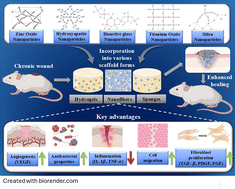
Complex wound healing continues to be a significant clinical concern, demanding innovative interventions that actively promote tissue regeneration and infection control beyond the capabilities of standard dressings. Inorganic nanoparticle-based scaffolds have emerged as promising platforms, providing both localized antimicrobial action and regenerative support. The unique physicochemical properties of nanoparticles, including high surface area, controlled ion release, and redox activity, enable multiple mechanisms for the inhibition of biofilm formation and modulation of the wound microenvironment to stimulate immunomodulation, fibroblast migration, angiogenesis, and extracellular matrix deposition. This review critically evaluates scaffold fabrication strategies, including electrospun nanofibers, gas foaming, and 3D-printed constructs, and their influence on structural integrity, ion release kinetics, and biocompatibility. We further analyse the mechanisms underlying inorganic nanoparticle-mediated antimicrobial activity, emphasizing the interplay between direct surface interactions and sustained ionic release, and also provide a detailed assessment of various inorganic nanoparticle-based scaffolds as antimicrobial platforms. Despite considerable clinical progress, challenges remain in optimizing ion release, maintaining scaffold stability, and establishing standardized safety and efficacy evaluations. This review highlights the translational potential of inorganic nanoparticle-integrated scaffolds as multifunctional platforms for advanced wound care and underscores future directions for design optimization and clinical application.
- This article is part of the themed collections: Recent Review Articles and Popular Advances
 Please wait while we load your content...


