


 PLATFORM UPDATE:


Nanotechnology in triple-negative breast cancer: a review of nanocarrier systems for enhanced efficacy and reduced toxicity
 a
Sajid
Mondal,
a
Amartya
Nandi,
a
Yeduvaka
Madhuri,
a
Suvadra
Das
b
and
Partha
Roy
*a
a
Sajid
Mondal,
a
Amartya
Nandi,
a
Yeduvaka
Madhuri,
a
Suvadra
Das
b
and
Partha
Roy
*a
Abstract
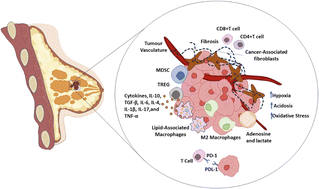
The aggressive and extremely diverse subtype of breast cancer known as triple-negative breast cancer (TNBC) lacks HER2, progesterone, and oestrogen receptors, which limits treatment options and increases the risk of metastasis and recurrence. Because of TNBC's complex tumour microenvironment (TME), genetic variety, and innate drug resistance, conventional therapies like chemotherapy and radiotherapy frequently cause severe systemic toxicity and have poor efficacy. By improving targeted delivery, reducing off-target effects, and facilitating multimodal therapy options, nanocarrier-based drug delivery devices provide a revolutionary strategy for TNBC. The ability of several nanocarrier platforms, such as liposomes, dendrimers, polymeric nanoparticles (NPs), and quantum dots, to target TNBC's distinct TME via passive and active mechanisms is thoroughly examined in this review. Stimulus-responsive systems enable regulated drug release, and nanocarriers functionalised with ligands, peptides, and antibodies have shown enhanced selectivity and decreased immune recognition. Furthermore, theranostic nanocarriers optimise therapeutic outcomes by enabling simultaneous diagnostic and treatment monitoring. Clinical translation is still hampered by important issues like scalability, regulatory obstacles, and possible immunogenicity. The relevance of nanotechnology in improving TNBC treatment is highlighted in this publication, which also addresses these obstacles and new developments intended to overcome them. Nanocarrier-based strategies have the potential to improve patient outcomes in TNBC management with precise control over drug cargo delivery sites and suitable engineering to mitigate the disease.
- This article is part of the themed collection: Recent Review Articles
 Please wait while we load your content...


