


 PLATFORM UPDATE:


Anthocyanin (ATH)-incorporating polyvinylpyrrolidone-ethyl cellulose-(2-hydroxypropyl)-β-cyclodextrin (PVP–EC–BCD) nanofiber-based pH sensor for ocular pH detection during accidental chemical spills

Abstract
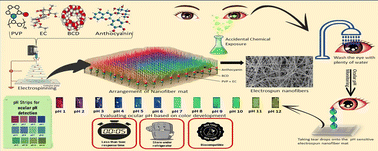
The existing ocular pH detection methods encounter numerous limitations, including low accuracy, poor sensitivity across a wide pH range, and patient discomfort, highlighting the need for innovative approaches. A novel biosensor for ocular pH detection has been developed to assess ocular health and chemical injuries in clinical settings. This study uses the pH-sensitive properties of anthocyanins (ATHs), natural pigments extracted from butterfly pea flowers, to develop a novel pH-responsive nanofiber mat. ATHs are integrated into a polymer blend containing polyvinylpyrrolidone (PVP), ethyl cellulose (EC), and (2-hydroxypropyl)-β-cyclodextrin (BCD) to fabricate electrospun nanofibers. The acquired characterization, employing scanning electron microscopy (SEM), Fourier-transform infrared spectroscopy (FTIR), X-ray diffraction (XRD), and thermogravimetric analysis (TGA), confirmed the successful fabrication of the ATH-infused nanofibers with a mean diameter ranging from 121 to 396 nm. Four formulations were tested: PVP:EC:BCD:ATH (18 ppm), PVP:EC:BCD:ATH (25 ppm), PVP:EC:BCD:ATH (35 ppm), and PVP:EC:BCD:ATH (50 ppm). Among them, the 50 ppm ATH-incorporating nanofiber mat exhibited the best performance in terms of color clarity, response time, and pH sensitivity. The fabricated 50 ppm ATH incorporating nanofiber mat demonstrated a rapid pH response time of less than 5 seconds (s) while exhibiting a color variation from pink to blue to green across the pH range of 1 to 12, providing a rapid and accurate method for visual pH detection. Based on the color performance of the 50 ppm ATH-incorporating system, a standardized color reference chart was developed to serve as a practical and visual guide for estimating pH levels in clinical applications. Zebrafish toxicity assays were conducted further to validate the safety and biocompatibility of the developed sensor, revealing no significant toxic effects across the range of ATH concentrations.
- This article is part of the themed collection: Popular Advances
 Please wait while we load your content...


