


 PLATFORM UPDATE:


Novel biogenic silver nanoparticles produced by Enterobacter xiangfangensis Pb204 reinstate the activity of specific antibiotics against resistant ESKAPE pathogens

Abstract
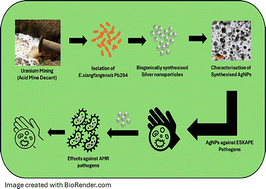
Antimicrobial resistance (AMR) in pathogenic bacteria remains a major challenge and critical threat to the global healthcare industry, demanding alternative therapeutic strategies. Among the various nanomaterials studied, silver nanoparticles (Ag-NPs) have shown promising antibacterial properties due to their broad-spectrum activity, oligodynamic effect, and reduced possibility of inducing microbial resistance. This study investigates the antimicrobial efficacy of biogenically synthesised silver nanoparticles using a cell-free extract of Enterobacter xiangfangensis Pb204 combined with antibiotics against eight pathogenic bacterial strains, including ESKAPE pathogens (Enterococcus faecium, Staphylococcus aureus, Klebsiella pneumoniae, Acinetobacter baumannii, Pseudomonas aeruginosa, Enterobacter spp.), E. coli, and Vibrio cholerae. The biogenic Ag-NPs were characterised by ultraviolet-visible (UV-Vis) spectroscopy and transmission electron microscopy (TEM) with energy-dispersive spectroscopy (EDS) analysis. Disc diffusion assays demonstrated that biogenic Ag-NPs (21 µg and 25 µg) effectively inhibited the growth of all tested pathogens. When Ag-NPs were combined with antibiotics amoxicillin/clavulanic acid (AMC), ampicillin (AMP), ciprofloxacin (CIP), meropenem (MEM), and vancomycin (VAN), most inhibition zones expanded, with the greatest synergistic effect observed in combination with vancomycin against Enterococcus faecium. These results support the potential of combined therapies using antibiotics and biogenic Ag-NPs to combat the effects of AMR in clinically significant pathogens.
 Please wait while we load your content...


