


The anticancer effect of γ-irradiation synthesized selenium nanoparticles stabilized in β-glucan on HepG2 cell proliferation via apoptosis induction and cell cycle arrest

Abstract
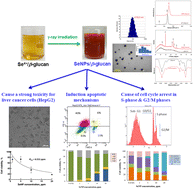
The product of selenium nanoparticles (SeNPs) stabilized in water-soluble yeast β-glucan (SeNPs/β-glucan) was successfully synthesized by γ-ray irradiation on a scale of 3 liters per batch. The analysis results of its transmission electron microscopy (TEM) image showed that SeNPs in the product were spherical with an average actual particle size of about 63.3 nm, while dynamic light scattering (DLS) analyses indicated that the average hydrodynamic particle size of the product was about 93.5 nm with a narrow distribution and negative zeta potential value (−10.1 mV). In addition, the results also showed the hydrodynamic particle size and size distribution of the product slightly increased after storage for 60 days at 4 °C, whereas a more pronounced increase was observed when stored at room temperature (25 °C). Besides, the structural characteristics of SeNPs/β-glucan were also comprehensively analyzed using X-ray diffraction (XRD), Raman spectroscopy and Fourier transform infrared (FTIR) spectroscopy to confirm the crystal structure of the Se nanoparticles and their interaction with β-glucan molecules. The anticancer effects of SeNPs/β-glucan on the liver cancer cell line (HepG2) were also investigated and the obtained results demonstrated that SeNPs/β-glucan strongly inhibited the proliferation of HepG2 cells with a half maximal inhibitory concentration (IC50) of about 6.5 ppm, while its IC50 on the normal cell line (L929) was found to be 48.3 ppm, indicating very low cytotoxicity. The selectivity index (SI) value of the product was determined to be around 7.4, indicating selective toxicity toward cancer cells. Furthermore, apoptosis assays demonstrated that SeNPs/β-glucan induced apoptosis and inhibited the proliferation of HepG2 cells by triggering cell cycle arrest in the S and G2/M phases in a dose-dependent manner. These findings provide a theoretical foundation and experimental evidence supporting the potential applications of SeNPs/β-glucan in the food and pharmaceutical fields.
 Please wait while we load your content...


