


 PLATFORM UPDATE:


Dynamic glycan network engineering of native mucin enables reversible, self-healing, and adhesive hydrogel interfaces
 ab
and
Satoshi
Fujita
*ab
ab
and
Satoshi
Fujita
*ab
Abstract
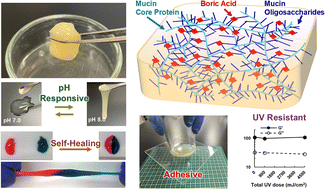
Mucin, a glycoprotein with a network-like structure of O-linked oligosaccharides, is a major component of the mucus layer and is essential for lubricating tissues, protecting against pathogens and chemicals, and maintaining intestinal symbiosis. Mucin-based hydrogels are promising for biomedical applications; however, conventional mucin hydrogels typically require chemical crosslinking, which involves complex procedures that cause irreversible structural changes. In this study, we developed a physically crosslinked mucin hydrogel via pH-dependent interactions between the diol groups of mucin oligosaccharides and boric acid (BA) without using chemical crosslinkers. This hydrogel was prepared by simply mixing porcine gastric mucin (PGM) and BA, followed by pH adjustment. It exhibited reversible gelation and tunable mechanical strength depending on PGM and BA concentrations. Increased gel strength was associated with increased crosslink density and reduced mesh size, which are attributed to dense multipoint crosslinking via the branched structure of mucin. The hydrogel demonstrated rapid self-healing within 1 min, strong adhesion to glass, and retention of mechanical integrity after ultraviolet (UV) irradiation, indicating compatibility with UV-based sterilization. These features highlight its potential as a reversible hydrogel for cell culture, tissue adhesives, and wound healing applications.
 Please wait while we load your content...


