


 PLATFORM UPDATE:

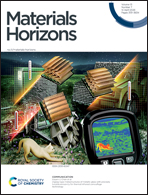
Zigzag-type metastructures of metallic glass with precisely tunable emissivity for thermal infrared camouflage technology
 *ab
*ab
Abstract
Precise control over thermal emissivity is essential for emerging applications in energy conservation, heat dissipation, and thermal infrared camouflage technologies. Conventional materials with fixed emissivity frequently fail to adapt to dynamic thermal environments. In this study, we introduced a single-layer zigzag metallic glass film that provided precisely tunable emissivity. The unique zigzag microstructure film induced strong optical anisotropy in the infrared region, resulting in anisotropic thermal emission. Such behavior is unattainable in conventional flat films. By combining the intrinsic infrared lossy characteristics of metallic glass with zigzag microstructures deposited at a glancing angle, we achieved a broad tunability of absorptance/emissivity, from 67.3% to 17.2%, with ±1% accuracy. The resulting zigzag-type metallic glass film precisely modulated infrared emission and attained more than 97% similarity to natural-background thermal images over temperatures from 93 °C to 260 °C. Together, these remarkable characteristics establish zigzag-type metallic glass films as a practical platform for precise thermal emissivity control in advanced thermal management applications.

- This article is part of the themed collection: Materials Horizons cover articles
 Please wait while we load your content...


