


 PLATFORM UPDATE:


A nanofibrous bacterial cellulose–carboxymethyl cellulose composite with high wet strength and active ester-mediated stable tissue adhesion in dynamic environments

Abstract
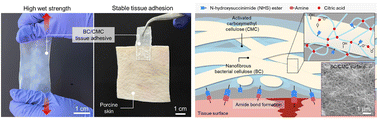
Tissue adhesives provide a minimally invasive alternative to sutures and staples, but achieving strong and durable adhesion on wet and dynamically deforming tissues remains a major challenge. Water disrupts interfacial bonding, and repeated deformation accelerates delamination, limiting the performance of existing synthetic and natural polymer systems. Here, we introduce a fully natural tissue adhesive based on a hybrid composite of bacterial cellulose (BC) and carboxymethyl cellulose (CMC) that integrates mechanical robustness with chemical reactivity. A three-dimensional BC nanofiber network provides wet-resistant structural stability and preserves its layered architecture after chemical processing, while CMC chains functionalized with N-hydroxysuccinimide (NHS) ester and citric acid crosslinks enable rapid covalent bonding with tissue surfaces. This combination yields fast wet adhesion (∼10 s), high shear strength on skin and heart tissues (∼25 kPa), and exceptional fatigue resistance, maintaining interfacial integrity over more than 300 deformation cycles. The BC/CMC tissue adhesive also supports long-term cell viability, confirming its cytocompatibility. Furthermore, kirigami-inspired laser-cut designs enable conformal, strain-accommodating adhesion on highly compliant tissues such as the lungs. Together, this natural polymer hybrid strategy provides a versatile and biocompatible platform for reliable sealing and repair on wet, dynamically moving biological surfaces.
 Please wait while we load your content...


