


 PLATFORM UPDATE:


3D manipulation of cell spheroids using laser-actuated microrobots

Abstract
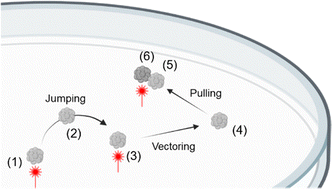
Three-dimensional (3D) cell spheroids provide a powerful model for studying cellular behavior, tissue engineering, and drug screening. However, constructing heterogeneous microtissues from basic spheroids remains challenging, as it requires precise and biocompatible manipulation. Here, we present a method for 3D spheroid manipulation by incorporating microrobots, which, upon laser stimulation, induce thermophoretic fluid flow to actuate spheroid motion. The microrobots are incorporated into spheroids in a reliable manner, relying on cell-driven self-assembly. Locomotion of the microrobot-integrated spheroids is achieved by regulating the laser power (11.7–17.6 mW) and frequency (0.33 Hz), which leads to three characteristic modes of motion: jumping, vectoring, and pulling. The combination of these motions enables robust spheroid assembly with excellent biocompatibility. The system allows for the generation of complex tissue models, where fibrosarcoma (HT1080 cells) spheroids and healthy fibroblast (HDF cells) spheroids are assembled separately and then brought together using the microrobotic locomotion capabilities. The fusion of assembled HT1080 and HDF spheroids reveals cancer-stromal cell interactions and tissue integration, while a cancer-spheroid-centered radial arrangement of fibroblast spheroids demonstrates the construction of spatially sophisticated assembloids. This study establishes a versatile strategy for spheroid manipulation, advancing 3D microtissue biofabrication for in vitro disease modeling.
 Please wait while we load your content...


