


 PLATFORM UPDATE:


Hydrogel-integrated multimodal physiological and modulation systems

Abstract
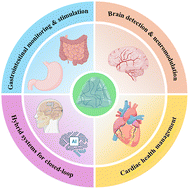
Hydrogels are emerging as a transformative class of materials for bridging the interface between electronics and biological systems. Their softness, high water content, and tunable ionic/electronic conductivity enable conformal, low-impedance, and biocompatible contact with tissues. This review surveys recent advances in hydrogel-integrated multimodal bioelectronic systems, with an emphasis on the stable signal acquisition, coupled sensing–actuation functions, and stimulus-responsive behaviors that support adaptive interfaces. We compare hydrogels with conventional biointerface materials and highlight key advantages such as stretchability, breathability, ionic conduction, and tissue compatibility. We then discuss representative system-level demonstrations in three domains: closed-loop brain monitoring with ultrasound neuromodulation, gastrointestinal (GI) retention and leakage detection, and cardiac monitoring, pacing, and repair. Finally, we summarize the remaining challenges including long-term stability, scalable manufacturing, and integration with microelectronics and outline opportunities for clinically deployable, autonomous, and personalized hydrogel-based bioelectronic systems.
- This article is part of the themed collections: Recent Review Articles and Soft wearable sensors
 Please wait while we load your content...


