


 PLATFORM UPDATE:


Quinoline/thiazole compounds as selective acetylcholinesterase inhibitors: synthesis and biological assessment
 ab
Derya
Osmaniye,
cd
Serkan
Levent,
de
Yusuf
Özkay
cd
and
Zafer Asım
Kaplancıklı
*cf
ab
Derya
Osmaniye,
cd
Serkan
Levent,
de
Yusuf
Özkay
cd
and
Zafer Asım
Kaplancıklı
*cf
Abstract
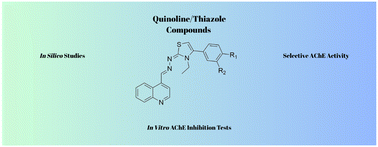
Acetylcholine (ACh), acetylcholinesterase enzyme (AChE), and AChE inhibition are of great importance in the treatment of neurodegenerative diseases. When it comes to AChE inhibition, FDA-approved AChE inhibitors such as donepezil are actively used in the treatment of neurodegenerative disorders. However, there is still a need for novel and unique inhibitors for the radical treatment of these diseases. The aim of this study was to design and evaluate new inhibitors for the treatment of neurodegenerative diseases. To meet this need, a series of new quinoline/thiazole derivative compounds were designed and synthesized, and their structures were elucidated using 1H-NMR, 13C-NMR and HRMS. There are many studies showing that quinolines and thiazoles have high potential efficacy in AChE inhibition. The compounds were synthesized through a multi-step synthetic route, and their inhibitory activities were subsequently examined using. Compound 3i emerged as the most promising derivative, distinguished by its interactions with amino acids such as Trp86 and Trp286 in in silico studies, and its potent in vitro activity against AChE with an IC50 value of 0.027 ± 0.002 μM. These findings suggest that these novel quinoline/thiazole derivatives could be potential candidates for the development of new therapies for neurodegenerative diseases.
 Please wait while we load your content...


