The effects of bioisostere substitution on the antimicrobial and physicochemical properties of supramolecular self-associating amphiphiles

Abstract

The rise of antimicrobial resistance (AMR) is one of the greatest health threats facing the world today. Supramolecular self-associating amphiphiles (SSAs) have shown potential for development as novel antimicrobial agents. We now move to explore the systematic use of nonclassical bioisosteres within these systems for the first time, reporting enhanced antimicrobial efficacy against a variety of clinically relevent bacteria as a result.
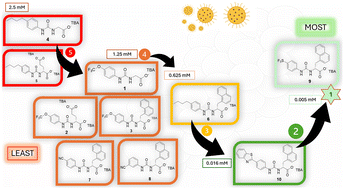
Graphical abstract: The effects of bioisostere substitution on the antimicrobial and physicochemical properties of supramolecular self-associating amphiphiles

Supplementary files

Article information

Article type
Research Article
Submitted
04 Feb 2026
Accepted
11 Mar 2026
First published
23 Mar 2026
This article is Open Access
Creative Commons BY license

RSC Med. Chem., 2026, Advance Article

The effects of bioisostere substitution on the antimicrobial and physicochemical properties of supramolecular self-associating amphiphiles

P. K. Naicker, M. Yacoub, L. J. White, D. E. Balderston, P. A. Hailey, J. M. Sutton, C. K. Hind and J. R. Hiscock, RSC Med. Chem., 2026, Advance Article , DOI: 10.1039/D6MD00091F

This article is licensed under a Creative Commons Attribution 3.0 Unported Licence. You can use material from this article in other publications without requesting further permissions from the RSC, provided that the correct acknowledgement is given.

Read more about how to correctly acknowledge RSC content.

Social activity

Spotlight

Advertisements