


 PLATFORM UPDATE:


Structure–activity landscape of Nurr1 (NR4A2) modulators: medicinal chemistry strategies for neurodegenerative disease intervention

Abstract
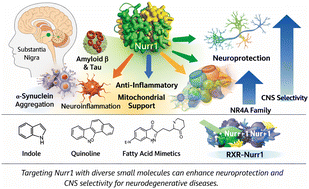
Nuclear receptor-related 1 protein (Nurr1/NR4A2) is an orphan nuclear receptor essential for dopaminergic neuron development, maintenance, and survival. Nurr1 is highly expressed in the substantia nigra and regulates transcription of key dopaminergic genes, including tyrosine hydroxylase (TH), vesicular monoamine transporter 2 (VMAT2), and dopamine transporter (DAT). Dysregulation of Nurr1 is linked to Parkinson's disease (PD), where reduced expression contributes to neuronal loss, oxidative stress, and neuroinflammation. Nurr1 also suppresses microglial activation and pro-inflammatory cytokine production in Alzheimer's disease, including TNF-α and IL-1β. Despite its therapeutic promise, Nurr1 remains a challenging target due to its atypical ligand-binding domain architecture and persistent limitations in NR4A subfamily selectivity. Early ligands such as amodiaquine and prostaglandin derivatives showed activity but lacked selectivity and drug-like properties. Recent structural studies suggest conformationally dynamic binding sites that may support structure-guided design; however, many reported Nurr1 ligands also activate Nur77 (NR4A1) and NOR-1 (NR4A3), complicating mechanistic interpretation. This review systematically analyzes structure–activity relationships (SARs) across major chemotype families, including indoles, quinolines, triazoles, thiazoles, thiophenes, imidazo[1,2-a]pyridines, and fatty acid mimetics. We critically evaluate binding evidence, functional activity, and neuroprotective profiles, highlighting key SAR determinants such as heteroaromatic substitution patterns, hydrogen-bonding capacity, and lipophilicity. Several scaffolds demonstrate validated binding with submicromolar affinity (Kd ≈ 0.11–0.17 μM); however, major gaps remain in achieving robust NR4A selectivity, establishing blood–brain barrier (BBB) penetration, and demonstrating consistent in vivo efficacy. Overall, this analysis highlights both the promise and the persistent challenges in developing Nurr1-targeted therapeutics for neurodegenerative disease intervention.
- This article is part of the themed collection: Celebrating the 5th Anniversary of RSC Medicinal Chemistry
 Please wait while we load your content...


