


 PLATFORM UPDATE:


Design and biological evaluation of triagonist GLP-1R/GCGR/GIPR peptides as potential therapeutic agents for diabetes and obesity

Abstract
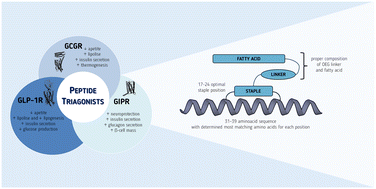
Obesity and type 2 diabetes have reached pandemic proportions, largely driven by sedentary lifestyles and unhealthy dietary habits. According to the World Obesity Atlas 2024, by 2035 more than 4 billion adults and children are expected to be living with overweight or obesity, up from 2.2 billion in 2020. These alarming trends contribute substantially to morbidity and mortality from noncommunicable diseases, underscoring the urgent need for innovative and effective therapeutic strategies. The present study aimed to design and develop a novel GLP-1/GIP/GCG receptors triagonist with high and balanced efficacy across all three biological targets. Advanced computer-aided drug design approaches were employed to optimize pharmacological activity and identify promising multi-receptor agonists rationally. Integrated bioinformatics analyses enabled identification of key sequence determinants and optimal modification sites, while molecular dynamics simulations elucidated the impact of stapling and staple positioning on α-helical stability and conformational rigidity in incretin-like peptides. Guided by these insights, 22 novel triagonistic structures were designed, synthesized, and evaluated in vitro using fluorescence membrane potential assays. Relative agonist activity was assessed using a balanced triagonism score, defined as the standard deviation of Δlog(Emax/EC50) values across GLP-1R, GCGR, and GIPR. Most compounds exhibited highly balanced pharmacological profiles, demonstrating comparable activity across receptors. The most active analogue, P2-L4, exhibited low-nanomolar potency across all three targets, with efficacy comparable to reference incretin therapeutics. The developed triagonists demonstrated potent in vitro activity, providing a solid foundation for further optimization and the future development of innovative therapies for obesity and diabetes.
- This article is part of the themed collection: Highlights from Industry
 Please wait while we load your content...


