


 PLATFORM UPDATE:


Design, synthesis and biological evaluation of benzoyl hydrazone derivatives as anticancer agents inducing ROS-associated mitochondrial apoptosis
 †ac
†ac
Abstract
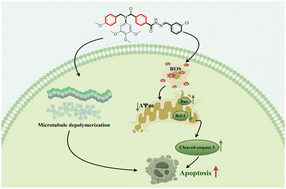
Cancer, due to its high morbidity and mortality rate, coupled with the dose-restricted toxicity of many chemotherapy drugs, is still a major challenge in the global health field. In order to meet this challenge, we report the design and synthesis of 16 benzoyl hydrazone derivatives using molecular hybridization to identify potent anticancer candidates. Biological evaluation revealed that compound Q-11 exhibited pronounced antiproliferative activity at nanomolar concentrations, with an IC50 value of 12.5 nM against SGC-7901 gastric cancer cells, and showed broad inhibitory effects across multiple human cancer cell lines. Notably, compound Q-11 displayed markedly lower cytotoxicity toward non-cancerous HK-2 renal epithelial cells, indicating a favorable in vitro selectivity profile. Mechanistic studies demonstrated that compound Q-11 induces early intracellular ROS accumulation, mitochondrial membrane depolarization, and caspase-dependent apoptosis. In addition, immunofluorescence analysis revealed significant disruption of microtubule organization following compound Q-11 treatment. Taken together, these findings identify compound Q-11 as a highly potent nanomolar-level anticancer lead, supporting its further investigation in anticancer drug discovery.
 Please wait while we load your content...


