


 PLATFORM UPDATE:


Discovery of enaminone-linked benzofuran derivatives as dual VEGFR-2/hCA IX inhibitors exhibiting hypoxia-mediated chemosensitization

Abstract
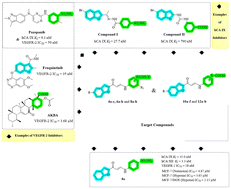
The overexpression of VEGFR-2 and carbonic anhydrase IX (hCA IX), two proven therapeutic targets in aggressive malignancies, is closely associated with hypoxia-driven tumor growth. A novel series of enaminone-linked benzofuran compounds was logically created and synthesized as possible dual inhibitors of both enzymes in order to solve this medicinal dilemma. With KI = 35.0 nM against hCA IX and IC50 = 0.058 μM against VEGFR-2, as well as better selectivity than acetazolamide, compound 4a was shown to be the most powerful member. When it came to MCF-7 cells, 4a demonstrated strong antiproliferative activity. In hypoxic settings, it outperformed doxorubicin (IC50 = 3.65 vs. 9.42 μM), and it remained highly active in both normoxia and hypoxia. G-phase cell-cycle arrest, increased apoptosis (57.36%), and changes in apoptosis-related genes, such as downregulating Bcl-2 and upregulating p53, caspase-9, and BAX, were all found by mechanistic investigations. By decreasing wound closure from 69.06% in normal cells to 64.47% and 36.12% at 0.1 and 0.5 μM, respectively, wound-healing experiments validated its significant anti-migratory potential. In silico ADMET predictions confirmed its drug-like profile, whereas molecular docking revealed advantageous interaction inside the ATP-binding site of VEGFR-2 and the zinc pocket of hCA IX. All things considered, compound 4a shows great promise as a dual-target inhibitor and potential chemosensitizer for the treatment of malignancies caused by hypoxia.
 Please wait while we load your content...


