


 PLATFORM UPDATE:


Synthesis and evaluation of enantiomeric quinoline-2-carboxamides: positron emission tomography imaging agents for the translocator protein

Abstract
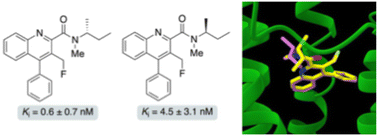
The translocator protein (TSPO) is a key biomarker for inflammation. Positron emission tomography (PET) imaging of TSPO has emerged as a valuable tool for investigating multiple disorders throughout the body. We previously reported the development of [18F]LW223, a quinoline-2-carboxamide bearing an R-configured side chain, which binds TSPO independently of the rs6971 human polymorphism and enables quantification of macrophage-driven inflammation in the course of myocardial infarction. In the present study, we provide a comprehensive molecular and biological characterisation of LW223 and its S-enantiomer, further supporting their potential as PET imaging agents for human inflammatory processes. Two synthetic routes were developed: one enabling direct multigram-scale synthesis of LW223, and another allowing late-stage (radio)fluorination. The latter was applied for the synthesis of the S-enantiomer. Binding assays using homogenised human brain tissue revealed that the S-enantiomer exhibits 7.5-fold lower affinity (Ki = 4.5 ± 0.7 nM) than the R-enantiomer, yet remains insensitive to rs6971 polymorphism. Molecular docking studies with the X-ray structure of wild-type TSPO from Bacillus cereus provided insights into enantiomer-specific binding interactions. Collectively, these findings advance our understanding of LW223 as a TSPO-targeted PET ligand for human inflammatory disease.
 Please wait while we load your content...


