


 PLATFORM UPDATE:


On the history, synthesis, and medicinal use of cantharidin, LB-100, and their analogs†

Abstract
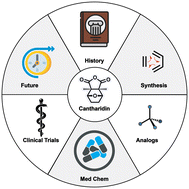
Cantharidin, a defensive toxin produced by blister beetles, has fascinated chemists, physicians, and historians for centuries. From its notorious use as the aphrodisiac “Spanish fly” to its modern FDA approval as YCANTH™ for molluscum contagiosum, this small yet complex molecule has inspired both infamy and innovation. Over the past hundred years, some of the most eminent synthetic chemists, including Professors Diels, Alder, Ziegler, Schenck, Stork, and Dauben, have tackled the formidable challenges of cantharidin synthesis, establishing benchmarks in organic chemistry. Parallel biological studies revealed cantharidin and its analogs as potent inhibitors of serine/threonine protein phosphatases, particularly PP1, PP2A, and PP5, with wide-ranging implications in oncology, immunology, and chemical biology. Derivatives such as norcantharidin and LB-100 have broadened therapeutic horizons, the latter reaching clinical trials as a novel anticancer agent and immune checkpoint potentiator. Despite inconsistencies in the literature, ranging from pharmacological selectivity to reproducibility of assay data, recent advances in structural biology, computational modeling, and medicinal chemistry have opened new opportunities to refine potency, selectivity, and stability of cantharidin-derived therapeutic molecules. This review critically examines the historical, chemical, and biomedical landscape of cantharidin and its derivatives, clarifies longstanding ambiguities, and highlights future opportunities to develop phosphatase-targeting therapies for cancer, autoimmune, and inflammatory disease.
- This article is part of the themed collection: Articles behind our 2026 journal covers - RSC Medicinal Chemistry
 Please wait while we load your content...


