


 PLATFORM UPDATE:


Design and optimization of simplified inhibitors targeting Escherichia coli and Klebsiella pneumoniae IspE

Abstract
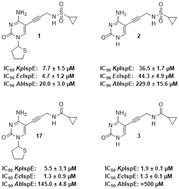
The methylerythritol phosphate (MEP) pathway is essential for isoprenoid biosynthesis in many pathogenic bacteria but is absent in humans, making its enzymes attractive antibacterial targets. IspE catalyzes the ATP-dependent phosphorylation of 4-diphosphocytidyl-2-C-methylerythritol, a key step in this pathway. Using a previously identified optimized hit as a starting point, we designed and synthesized a focused library of twelve simplified analogues that retained essential pharmacophoric features while improving synthetic accessibility. Docking studies with Escherichia coli IspE guided the design and predicted binding orientations consistent with known ligand interactions. Biochemical evaluation of the library against E. coli and Klebsiella pneumoniae IspE revealed several low-micromolar inhibitors, confirming the predicted binding interactions. Structure–activity relationships indicated that the hydrophobic pocket adjacent to the cytidine-binding region is a key determinant of potency. Although the compounds showed limited whole-cell activity, these results demonstrate that simplified amide analogues can effectively engage the IspE active site and highlight the importance of the hydrophobic pocket in ligand binding. Overall, this work combines structure-based design, synthesis, and biochemical validation to provide a foundation for further optimization of simplified IspE inhibitors as potential antibacterial leads.
- This article is part of the themed collection: Celebrating the 5th Anniversary of RSC Medicinal Chemistry
 Please wait while we load your content...


