


 PLATFORM UPDATE:


Comprehensive multi-omics analysis and experimental validation indicate that VPS35 is a promising biomarker for prognosis, immunotherapy, and chemotherapy in LIHC

Abstract
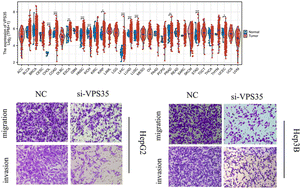
Background : Vacuolar protein sorting 35 (VPS35) is a key subunit of the retromer complex, and several previous studies have shown that VPS35 plays an important role in the progression of hepatocellular carcinoma (LIHC). However, the comprehensive value of VPS35 in LIHC in prognostic assessment, immunotherapy and chemotherapy has not been systematically reported. Methods: To characterize the comprehensive value of VPS35 in LIHC, we performed a comprehensive multi-omics analysis. Based on multiple databases such as The Cancer Genome Atlas (TCGA), Gene Expression Omnibus (GEO), and Human Protein Atlas (HPA), the relevant analyses were accomplished using R software and websites such as TIMER2, STRING, and TISIDB. We primarily evaluated the correlation of VPS35 expression in LIHC with prognosis, immune microenvironment infiltration, immunotherapy and chemotherapy. Western blotting (WB), quantitative real-time PCR (RT-qPCR), CCK8, colony-formation assay, Transwell, and in vivo experiments were also performed to verify the function of VPS35 in LIHC. Results: Compared with normal tissues, VPS35 was highly expressed in a variety of tumor tissues such as LIHC. VPS35 has a good diagnostic value in a variety of tumors. In a variety of tumors such as LIHC, upregulation of VPS35 expression levels is associated with poor prognosis. In LIHC, VPS35 expression levels were significantly correlated with clinicopathological features such as the T stage, pathological stage, histological grade, vascular invasion, and residual tumor. Pan-cancer analysis showed that VPS35 expression was positively correlated with tumor mutation burden (TMB) in 14 cancer types and microsatellite instability (MSI) in 15 cancer types. GO, KEGG and gene set enrichment analysis (GSEA) revealed that VPS35 was positively correlated with the immunoglobulin complex, pro-iso-cellular adhesion via plasma membrane adhesion molecules, and immunoglobulin receptor binding. Multiple related genes of VPS35 also had strong prognostic value in LIHC. Immune infiltration analysis showed that VPS35 expression levels were associated with multiple immune cell infiltrations. Further analysis showed that VPS35 expression levels were higher in proliferating T cells (Tproif) and monocyte-derived macrophages in LIHC. Downregulation of VPS35 expression levels may enhance the therapeutic efficacy of immune checkpoint inhibitors (ICIs). Knockdown of VPS35 significantly reduced the proliferation, invasion, migration of tumor cells and inhibited subcutaneous tumor formation. Conclusion: VPS35 is highly expressed in LIHC and exhibits significant diagnostic and prognostic value. Targeted knockdown of VPS35 may inhibit LIHC progression and enhance the efficacy of immunotherapy and chemotherapy.
 Please wait while we load your content...


