


 PLATFORM UPDATE:


Prodrug strategies in developing antiviral nucleoside analogs

Abstract
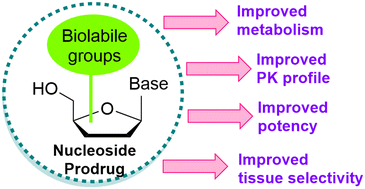
Prodrug strategies are used to enhance the physicochemical and pharmaceutical properties of drug candidates that may not be suitable for specific delivery or are limited by formulation options. A prodrug derivative is converted into its active pharmaceutical ingredient (drug) through enzymatic or chemical reactions within the body. Antiviral nucleoside prodrugs have garnered considerable interest in drug discovery, leading to the approval of key drugs such as remdesivir (SARS-CoV-2), Sovaldi (hepatitis C virus, HCV), and tenofovir disoproxil fumarate [hepatitis B virus (HBV) and human immunodeficiency viruses (HIV)]. Their success lies in improving the oral bioavailability and delivering the parent drug to the targeted tissues. This review focuses on the prodrugs of antiviral nucleosides evaluated in humans (approved, in development or terminated), providing an overview of the different approaches utilized and discussing their in vitro and in vivo benefits.
 Please wait while we load your content...


