


 PLATFORM UPDATE:


Design, synthesis, and biological evaluation of procaine-based triazole–isoxazoline hybrids as selective PI3K/mTOR inhibitors for esophageal cancer therapy: in vitro and in vivo studies

Abstract
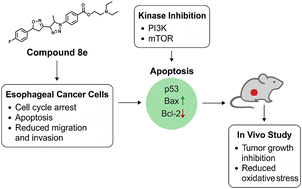
A novel series of procaine derivatives incorporating 1,2,3-triazole and isoxazoline scaffolds were developed and evaluated for their anticancer potential, particularly against esophageal cancer. Initially, the synthesized compounds were screened for their kinase inhibitory activity against PI3K, mTOR, CDK1, CDK4, EGFR, and VEGFR2, where they exhibited excellent inhibitory potency against PI3K and mTOR. Among the synthesized compounds, 8e, 8f, and 8g emerged as the top-performing kinase inhibitors. These three candidates were subsequently tested against a panel of human cancer cell lines, including breast, cervical, lung, liver, and esophageal cancer cells. Notably, they demonstrated superior cytotoxic activity against esophageal cancer cells. Of these, compound 8e was identified as the most potent and was further evaluated against six esophageal cancer cell lines (Eca109, TE1, TE13, KYSE30, KYSE70, and KYSE150) with diverse genotypic backgrounds. Compound 8e exhibited the highest activity against Eca109 cells. Further investigations revealed that compound 8e significantly inhibited Eca109 cell viability, as confirmed by the MTT assay, and induced apoptosis, as evidenced by annexin V/PI dual staining and DAPI nuclear staining. It also caused G0/G1 cell cycle arrest, decreased mitochondrial membrane potential, and demonstrated marked telomerase inhibitory activity. In addition, wound healing and transwell assays confirmed its ability to suppress the migration and invasion of Eca109 cells. Western blot analysis revealed that compound 8e modulated the expression of key apoptotic regulators (Bcl-2, Bax, and p53) and downregulated the PI3K/Akt/mTOR signaling pathway. In an orthotopic xenograft mouse model, compound 8e significantly reduced tumor volume and increased body weight in a dose-dependent manner, indicating potent in vivo efficacy with favorable tolerability. Biochemical analyses showed that compound 8e mitigated oxidative stress by regulating MDA, SOD, and GSH levels and suppressed pro-inflammatory cytokines including TNF-α, IL-1β, and IL-6. Immunohistochemical staining further confirmed reduced expression of PI3K and p-Akt (Ser473) in tumor tissues. Pharmacokinetic evaluation via both intravenous and oral administration demonstrated that compound 8e possesses excellent bioavailability, highlighting its potential as a promising therapeutic candidate for the treatment of esophageal cancer.
 Please wait while we load your content...


