


 PLATFORM UPDATE:


Synthesis and evaluation of HFIP bearing triazolo-amides as amyloid-β aggregation inhibitors and suppressors of aggregation induced neuroinflammation

Abstract
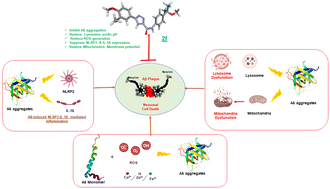
Alzheimer's disease (AD) is a complex neurodegenerative disease with biological signatures of amyloid beta (Aβ) aggregated plaques and increased levels of bio-metals like copper (Cu), zinc (Zn), and iron (Fe). Aβ-induced lysosomal membrane permeabilization is a key event in neuronal injury in AD. Aβ aggregation also modulates mitochondria membrane potential (MMP), activates interleukin 1β and NLRP3 inflammasome eventually leading to increased reactive oxygen species (ROS) production, neuronal apoptosis and mitochondrial dysfunction. Here, we report a multi-functional compound (2f) identified through structure–activity relationship study from a series of polyfluorinated triazole compounds. Compound 2f suppressed metal induced aggregation, downregulated NLRP3 inflammasome and IL-1β expression. It has maintained the lysosomal acidic pH and restored mitochondrial membrane potential. HFIP bearing triazolo amide (2f) was found to chelate with Cu(II) and Zn(II) selectively in the presence of a range of other physiologically relevant metals. Further, a molecular dynamics (MD) simulation study revealed 2f disrupted the aggregation via interacting with chain A of pentameric Aβ. Therefore the HFIP bearing triazole amides may serve as potential scaffolds for drug development towards the treatment of AD.
 Please wait while we load your content...


