


 PLATFORM UPDATE:


Structure–activity relationship of GSK-3β inhibitors: insight into drug design for Alzheimer's disease
 b
and
Abha
Sharma
*a
b
and
Abha
Sharma
*a
Abstract
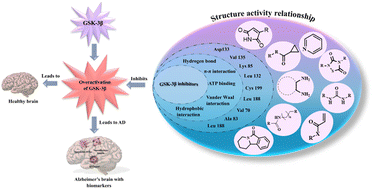
Alzheimer's disease (AD) is a neurodegenerative disorder characterised by cognitive impairment, memory loss, and decline in thinking and learning skills. The exact pathophysiology of the disease is still unknown; however, theories such as tau hyperphosphorylation, amyloid-β (Aβ) aggregation, and cholinergic dysfunction explain its pathogenesis. A few available drugs provide only symptomatic relief, while recently approved monoclonal antibody-based drugs target aggregated amyloid beta clearance. Extensive research is ongoing for drug development targeting various pathways, where one of the targets is glycogen synthase kinase (GSK-3β). GSK-3β plays diverse roles in physiological functions, and its dysregulation may lead to pathological conditions such as Alzheimer's disease (AD). GSK-3β comprises serine and threonine residues, is responsible for phosphorylation of the tau protein, and activates the amyloid precursor protein (APP) to synthesise Aβ. Consequently, the abnormal functioning of GSK-3β leads to hyperphosphorylation of the tau protein, and the formation of Aβ plaques eventually leads to neurofibrillary tangles. To develop GSK-3β inhibitors, one must know the requirements of crucial structural features in drug candidates to act at the active site for interaction. This review focuses on the latest pool of GSK-3β inhibitors and their design strategy, structure–activity relationship (SAR), molecular docking, and permeability across the brain layers. This broad review collection may benefit readers by providing the structural requirements to develop new GSK-3β inhibitors for treating AD.
 Please wait while we load your content...


