


 PLATFORM UPDATE:


DTCC–RGDV: a nano-scaled conjugate capable of targeting arterial thrombi and releasing anti-thrombotic pharmacophore DTCC
 *ab
*ab
Abstract
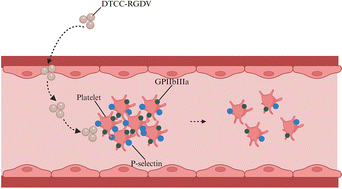
By docking into the active pockets of P-selectin and GPIIb/IIIa, virtual screening identified (3S)-1-[(5,5-dimethyl-3,4-dioxan-1-yl)-1,2,3,4-tetrahydro-β-carboline-3-carboxylic acid (DTCC) as a potential lead compound. The in vivo evaluation of DTCC was then performed in a rat thread model, and the arterial thrombus weight of the rats orally treated with 1 µmol kg−1 DTCC was significantly lower than that of the rats orally treated with NS and 20 µmol kg−1 RGDV (Arg-Gly-Asp-Val). Therefore, DTCC was coupled with RGDV, and a series of research studies on DTCC–RGDV were conducted. It was found that DTCC–RGDV was able to form a trimer, thereby forming nanoparticles with a diameter suitable for safe transport via blood circulation to bind to the surface of the platelets, simultaneously decreasing plasma P-selectin and GPIIb/IIIa levels to target the arterial thrombus and releasing the anti-arterial thrombus-active DTCC. Owing to the above-mentioned benefits, DTCC–RGDV did not cause kidney and liver injury in the treated rats.
- This article is part of the themed collection: Materials Advances Covers
 Please wait while we load your content...


