


 PLATFORM UPDATE:


A photosensitizer-drug conjugate for synergistic photodynamic therapy and photo-triggered camptothecin release

Abstract
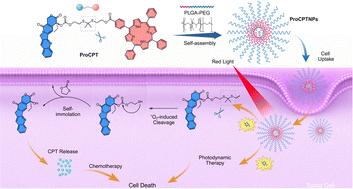
Combination therapy has emerged as a promising strategy to enhance treatment efficacy at reduced doses and overcome the limitations of monotherapy by harnessing complementary therapeutic modalities, while external stimulus-controlled therapeutic activation can localize therapeutic activity to tumors and reduce systemic toxicity. Here, we present a chemo-photodynamic combination nanotherapy strategy based on a red light-responsive photosensitizer-drug conjugate. This prodrug integrates the photosensitizer 5-mono(4-carboxyphenyl)-10,15,20-triphenylporphine (TPP) with an anticancer drug camptothecin (CPT) through a singlet oxygen-cleavable thioketal linker. The prodrug exhibited minimal dark toxicity in vitro and was readily encapsulated into PLGA–PEG nanoparticles, affording nanoparticles that exhibited uniform morphology, high stability, and efficient cellular uptake. Upon red light irradiation, TPP generates singlet oxygen (1O2) to induce photodynamic cytotoxicity and simultaneously cleaves the thioketal linker, triggering the controlled release of CPT. The intrinsic PDT cytotoxicity of the photo-generated 1O2, together with the CPT released via 1O2-mediated thioketal cleavage, synergistically enhanced cytotoxicity in photo-irradiated HeLa cells compared with either PDT or chemotherapy alone. Collectively, this study demonstrates a chemo-photodynamic combination nanotherapy strategy that enables red-light-guided, spatiotemporal control of cancer therapy.
 Please wait while we load your content...


