


 PLATFORM UPDATE:


Carbon nanotube incorporated magnetic biochar derived from water hyacinth for chromium removal from tannery effluent

Abstract
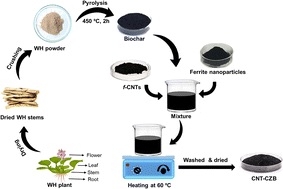
This study presents a magnetically separable, biochar-supported nanocomposite adsorbent for efficient removal of chromium (Cr) from tannery wastewater. Biochar is derived from stems of water hyacinth (WH), an invasive aquatic plant, and modified with 1 wt% carbon nanotubes (CNTs) and 5 wt% Co–Zn ferrite nanoparticles. The CNT and Co–Zn ferrite incorporated biochar (CNT-CZB) nanocomposite exhibits a mesoporous structure with a rough surface morphology. The CNT-CZB achieved a maximum adsorption capacity of ∼81 mg g−1 for the synthetic solution and ∼101 mg g−1 for real tannery wastewater. Adsorption is pH-dependent, enhanced at higher temperature and Cr concentration, and rapid in the initial stage. Adsorption kinetics and isotherms suggest chemical processes primarily govern Cr adsorption with mixed monolayer and multilayer adsorption behavior. Thermodynamic studies reveal that the process is spontaneous and thermodynamically favorable. Key adsorption mechanisms include electrostatic interactions, complexation with oxygen-containing functional groups, and the reduction of Cr from hexavalent to trivalent states. Statistical optimization using Box–Behnken design reveals that the adsorption capacity is predominantly controlled by the initial Cr concentration, followed by pH and reaction time. This research demonstrates a dual-benefit solution by converting problematic WH plants into sustainable and value-added materials while reducing water pollution through Cr adsorption.
 Please wait while we load your content...


