


 PLATFORM UPDATE:


Valorisation of bourbon distillery waste into single-source hybrid lithium-ion capacitors

Abstract
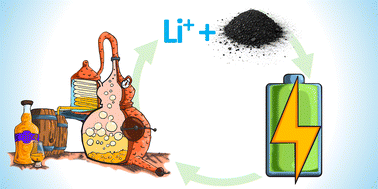
Bourbon, an iconic American whiskey, is primarily produced in Kentucky, which accounts for 95% of the world's supply. Between 2000 and 2024, bourbon output in Kentucky increased sixfold, creating significant sustainability challenges, particularly the disposal of spent grains (stillage), a high-volume byproduct generated at 6–10 times the volume of bourbon produced. This study presents a scalable strategy to upcycle bourbon stillage into high-performance carbon materials for energy storage applications. The process involves different thermal and chemical treatments to obtain both activated and hard carbons. The resulting activated carbons assembled into symmetric electric double-layer capacitors (EDLCs) deliver outstanding electrochemical performance: 96 ± 2% capacitance retention after 10 000 cycles, with energy densities of 23.8–1.9 Wh kg−1 and power densities of 0.27–9.2 kW kg−1. Single-source hybrid lithium-ion capacitors (LiCs) assembled with bourbon whiskey-derived hard carbon and activated carbon achieve superior performance, with energy densities of 135–48 Wh kg−1 at power densities of 0.215–22 kW kg−1. LiCs also exhibit good galvanostatic retention at 3 A g−1, losing only 17 ± 3% of capacitance and capacity after 5000 charge/discharge cycles and an additional 14 ± 2% after 10 000 cycles. These findings highlight an eco-friendly, circular approach to valorising distillery waste into advanced energy-storage materials, with broad applicability across the spirits and ethanol production sectors.
 Please wait while we load your content...


