


 PLATFORM UPDATE:


Biocompatible melanin-functionalized CaCO3 nanoparticles for cell protection against photoinduced oxidative stress
 *ab
Chiara
Boncristiani,
de
Alessandro
Pezzella,
fg
Giuseppe
Ciccarella
cd
and
Viviana
Vergaro
*e
*ab
Chiara
Boncristiani,
de
Alessandro
Pezzella,
fg
Giuseppe
Ciccarella
cd
and
Viviana
Vergaro
*e
Abstract
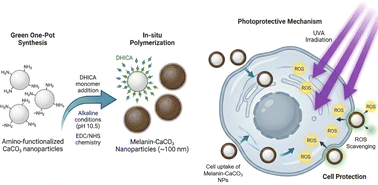
Melanin is a natural biopolymer with intrinsic antioxidant, photoprotective, and anti-inflammatory properties, making it a promising component for bioinspired functional materials. In this study, we report a green, one-pot synthesis of hybrid melanin–calcium carbonate nanoparticles (melanin–CaCO3 NPs) via in situ polymerization of 5,6-dihydroxyindole-2-carboxylic acid (DHICA) on amino-functionalized CaCO3 templates. The resulting nanoparticles combine the biocompatibility of the inorganic scaffold with the multifunctionality of melanin. Detailed physicochemical characterization confirmed the successful formation of the hybrid system, while in vitro studies on two human cell lines demonstrated excellent cytocompatibility, promotion of cell proliferation, and marked reactive oxygen species (ROS)-scavenging ability, achieving approximately 70% ROS reduction at a dose of 10 µg mL−1. Notably, even with a low melanin content (1%), the NPs exhibited significant intracellular photoprotective activity against photoinduced oxidative stress. These findings suggest that melanin–CaCO3 NPs hold strong potential as green-engineered, multifunctional nanomaterials for biomedical applications, particularly in oxidative stress-related therapies and photoprotection.
 Please wait while we load your content...


