


 PLATFORM UPDATE:

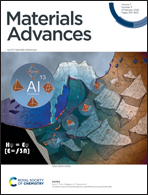
Bioinspired superhydrophobic surfaces for anti-corrosion and drag reduction using additive manufacturing for marine applications
 a
and
Harpreet Singh
Grewal
*a
a
and
Harpreet Singh
Grewal
*a
Abstract
Nature offers exquisite examples of superhydrophobicity, yet replicating their intricate geometries remains challenging with conventional manufacturing techniques. In this study, bioinspired intricate surface geometries were fabricated using additive manufacturing with flame spraying to impart nano-scale hierarchical roughness essential for sustained de-wetting performance. The complex geometries inspired from different superhydrophobic surfaces such as a lotus leaf, taro leaf, springtail, and butterfly wings were created on 17-4 PH stainless steel using powder bed fusion. Furthermore, the additive textures were adorned with micro-nano roughness generated through aluminium flame spraying. The influence of surface geometry on de-wetting, durability, corrosion, and drag reduction behaviour was studied. Post-silanization, the lotus-inspired flame-sprayed (LFS) sample morphology exhibited superior de-wetting properties, with dynamic contact angles of 158° and 156°, and a low sliding angle of 5°. This sample demonstrated high mechanical durability by maintaining superhydrophobicity for more than 6000 abrasion cycles at 5 kPa, with the unique trait of self-regeneration. Additionally, it resisted liquid impact for over 120 minutes in simulated rain at 4 m s−1 and displayed a low corrosion current density of 0.3 µA cm−2, indicating improved corrosion resistance. The coating demonstrated superior drag reduction for water, and low surface tension for liquids and oil, with drag 21 times lower than substrate for water. This study advances the practical applicability of superhydrophobic coatings and bridges the gap between lab-made prototypes and scalable industrial applications with high durability accompanied by superior anti-drag and anti-corrosion characteristics.

 Please wait while we load your content...


